Oct 28, 2026
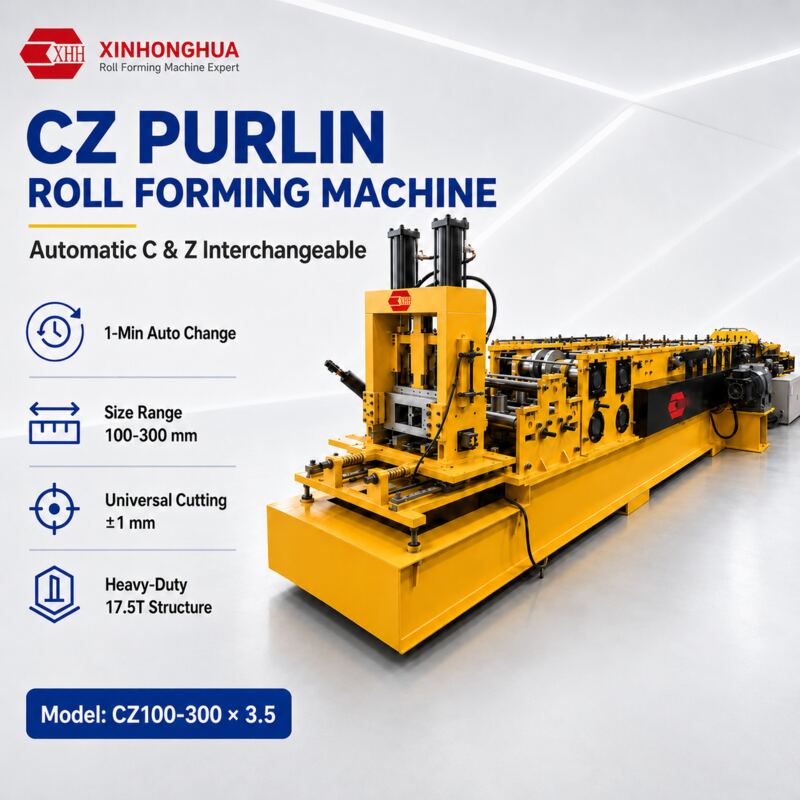
A C/Z purlin roll forming machine may handle several sections within its approved operating range, but a mixed order still needs a clear production plan. Grouping compatible jobs, controlling revisions and keeping finished bundles identifiable can make a busy workshop easier to manage. This guide explains how to plan mixed-size purlin production without losing sight of delivery priorities.
1. Build a job list from approved drawings
Start with the latest approved member schedule. Give every job a reference and record the C or Z section, material grade, base metal thickness, coating, member length, hole pattern and quantity. Include the required delivery or assembly date. Two members with the same web depth may still need different flange dimensions, material or punching, so do not group them by profile name alone.
2. Separate material families before arranging sizes
Review which jobs can use the same specified coil material and width. Keep differences in grade, thickness and coating visible on the schedule. Where coil changes are needed, include handling and setup time in the plan. The machine's approved section and material range remains the limit; scheduling does not make an unsuitable combination acceptable.
3. Group compatible setups while protecting delivery dates
Within a material group, consider the changes needed for section geometry, C/Z orientation and punching tools. Running compatible jobs together may reduce repeated setup work. However, the longest run should not automatically come first if it delays an urgent delivery. A practical schedule balances setup effort, due dates, available coils and space for finished bundles.
For example, a workshop might group several C-section jobs using the same material, then schedule a Z-section group after the required changeover. The exact sequence depends on the machine configuration and order mix. Confirm the actual operator steps rather than assuming every size or C/Z change is fully automatic.
4. Release a checked sample after each relevant change
Use the approved drawing to check a representative member after a material, section or punching setup change. Record section dimensions, cut length and hole references required by the job. Keep the accepted sample or inspection record clearly linked to the batch. Our guide to purlin dimensions and punching control provides related inspection points.
5. Keep the cutting list connected to bundle identification
A mixed-size order can become difficult to sort if similar members are combined without labels. Identify bundles by project, section, length group and quantity, using the system agreed with the customer or assembly team. Record replacements and shortfalls separately. A completed machine counter should be reconciled with the accepted parts and packing list before the order is marked complete.
6. Schedule the complete cycle, not only forming speed
Allow for coil handling, job setup, sample checks, punching, cutting, collection and bundle changes. The time needed to complete an order is not determined by forming speed alone. Compare planned time with actual accepted output and record the reason for delays. This creates a useful basis for improving the next mixed order without promising an unsupported production rate.
A simple batch release checklist
Drawing revision and job reference confirmed
Correct coil material and section setup identified
Punching pattern and length program checked
Representative sample accepted against the job requirements
Finished-member collection and bundle labels prepared
Accepted quantities reconciled with the packing list
Discuss the order mix with Xinhonghua
Share representative profile drawings, material requirements, batch sizes and changeover frequency when discussing a purlin machine. These details help define a configuration and workflow suited to the factory. For dependable daily operation, also use the C/Z purlin machine maintenance checklist.
Read More


 IPv6 network supported.
 +86 13605085003
 sunnie@xhhjx.com


