When comparing a C/Z purlin roll forming machine, ask what the quoted C-to-Z changeover actually includes. A useful discussion follows the entire transition from the last accepted C purlin to the first accepted Z purlin, including setup, checks and operator involvement.
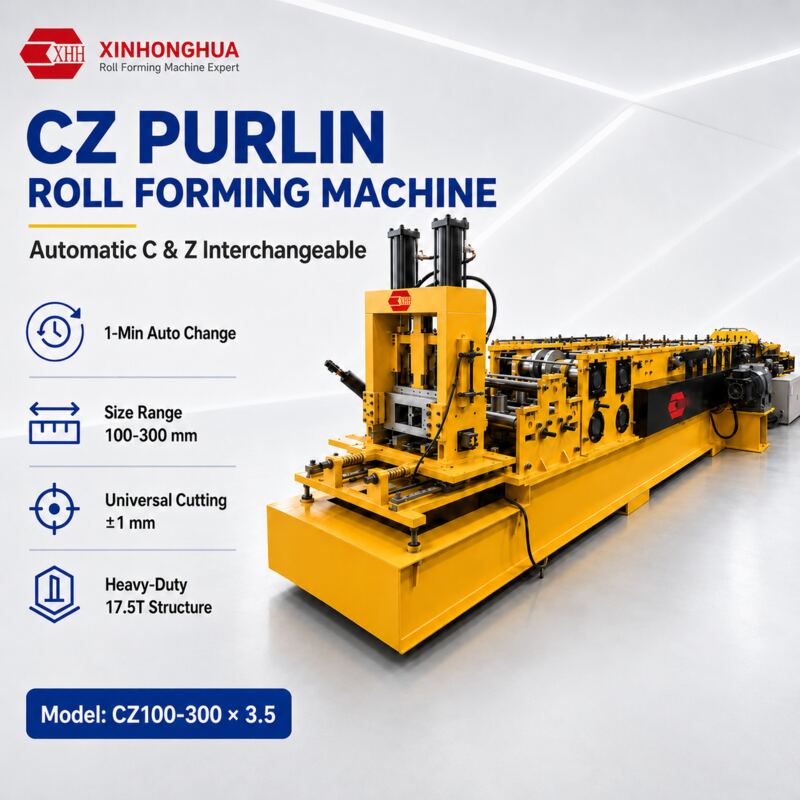
Send dimensioned C and Z section drawings with the intended material grade, thickness range, lengths and hole patterns. Identify which combinations you expect to run regularly. A broad machine description does not establish that every combination in a buyer's schedule is supported.
Ask the supplier to mark the proposed configuration against your drawings. Record any restrictions, optional tooling and items that require separate confirmation. Keep the approved drawings with the quotation so purchasing and production use the same reference.
Changing between C and Z sections and changing profile dimensions are different questions. Ask which operations are automatic, which require operator input and which involve tooling work. Also clarify how the punching and cutting arrangements accommodate the requested profiles.
Request a step-by-step explanation for the exact machine offered. Avoid assuming that a feature shown on another model or in a general demonstration is included in your order.
A quoted changeover time is easier to evaluate when its start and finish are defined. Does it describe only the machine adjustment, or does it include job selection, trial material, inspection and release? Ask for these activities to be recorded separately during a representative demonstration.
Use your own production mix to judge the result. For broader scheduling, review planning mixed-size purlin batches and estimating output beyond line speed.
Agree in advance on the dimensions, hole positions and cut features to inspect, together with the applicable acceptance criteria. Record the material used, settings, measurements and any adjustments. Keep sample identification consistent so a demonstration can be traced to the agreed drawing.
Before ordering from Xinhonghua, request written confirmation of the changeover sequence, included tooling, training scope and acceptance procedure for your proposed configuration. This gives both teams a practical basis for commissioning and future production planning.
No. One changes the section type; the other changes its dimensions. Ask the supplier to explain how each is handled on the proposed machine.
It should use agreed profiles and material, show the required operator tasks, and finish with inspection of the first acceptable profile.
No. Confirm the first produced profile against the approved drawing and acceptance criteria before releasing the batch.
 IPv6 network supported.
 +86 13605085003
 sunnie@xhhjx.com